Veteran Esthetician: "The $50 Billion Anti-Aging Industry Has Been Lying to Women Over 50… But One Korean Cream Replaces the Entire Routine"
A 20-year licensed esthetician teams up with Korean dermatologist Dr. Kim to expose the "Big Beauty" conspiracy keeping 60 million American women trapped in expensive multi-step routines that never work, and reveals the single clinical-grade cream Korean women have used for decades to replace every product on the shelf.
I'm about to make every dermatologist, every Sephora rep, every premium skincare brand, and every "anti-aging expert" on Instagram very, very angry.
My name is Sarah Mitchell.
I've been a licensed esthetician for 20 years.
I have held more women's faces in my hands than I can count. I know what healthy skin feels like under my fingertips. I know what damaged skin feels like. I know what tired skin feels like. And over the past five years, I've felt something that still makes my stomach turn every time I think about it.
The same women coming back. The same expensive products on their bathroom shelves. The same disappointment in their eyes.
I'm about to tell you something the American skincare industry does not want you to hear. Something that is going to make every premium brand, every department store counter, and every dermatology clinic that pushes expensive multi-step routines furious.
Because a board-certified Korean dermatologist and I stumbled onto the same truth from completely different worlds, and what we found could cost the American beauty industry billions in lost revenue.
I have been told to stay in my lane. Told that I am "just an esthetician" and I should leave the formulating to the chemists.
But I don't care anymore.
Not after watching my most loyal clients stop showing up because they were embarrassed to sit in my chair.
Not after recommending products for 20 years that I now know were never going to deliver what they promised.
Not after referring more women to Botox appointments than I could count, knowing the injections would smooth the surface for twelve weeks and do nothing to address what was happening underneath.
Not after discovering that the entire $50 billion anti-aging industry has been built on one simple, profitable lie.
Here is the lie: "Your skin needs a different product for every problem."
A serum for fine lines. A different serum for dark spots. An eye cream because the eye area is different. A retinol for cell turnover. A moisturizer to seal it in. A vitamin C for brightness. A peptide cream for firmness. Sunscreen on top. Sometimes a separate neck cream. Sometimes a separate "decolletage" serum. And when the bottles stop working, Botox every twelve weeks to hide what the bottles never fixed.
Six bottles. Eight bottles. Ten bottles. The shelves get longer. The routines get more complicated. The bill at Sephora gets bigger. The dermatology copay gets larger.
And the skin?
The skin gets confused. The skin gets irritated. The skin gets tired of being treated like a chemistry experiment.
And the women in my chair keep getting older, more frustrated, more broke. They sit down and say the same thing every single appointment.
"Sarah, I've tried everything. Nothing works."
If you are reading this with a bathroom shelf full of bottles that cost you more than your monthly grocery bill…
If you have started avoiding mirrors in bright lighting because the makeup you used to rely on no longer covers what's underneath…
If you have caught yourself in a photograph and not recognized the tired, gray-toned woman looking back…
If you dread your next esthetician appointment because you know she can see what you are trying to hide…
The next 10 minutes of your life could change everything.
My name is Sarah Mitchell. I am a licensed esthetician with over 20 years behind the facial bed. I have worked with more than 3,000 women. I specialize in mature, sensitive, and post-menopausal skin.
I am not a doctor. I am not a chemist. I am the woman who runs her hands across your face every 4 to 6 weeks and knows exactly what your skin used to feel like, and what it feels like now.
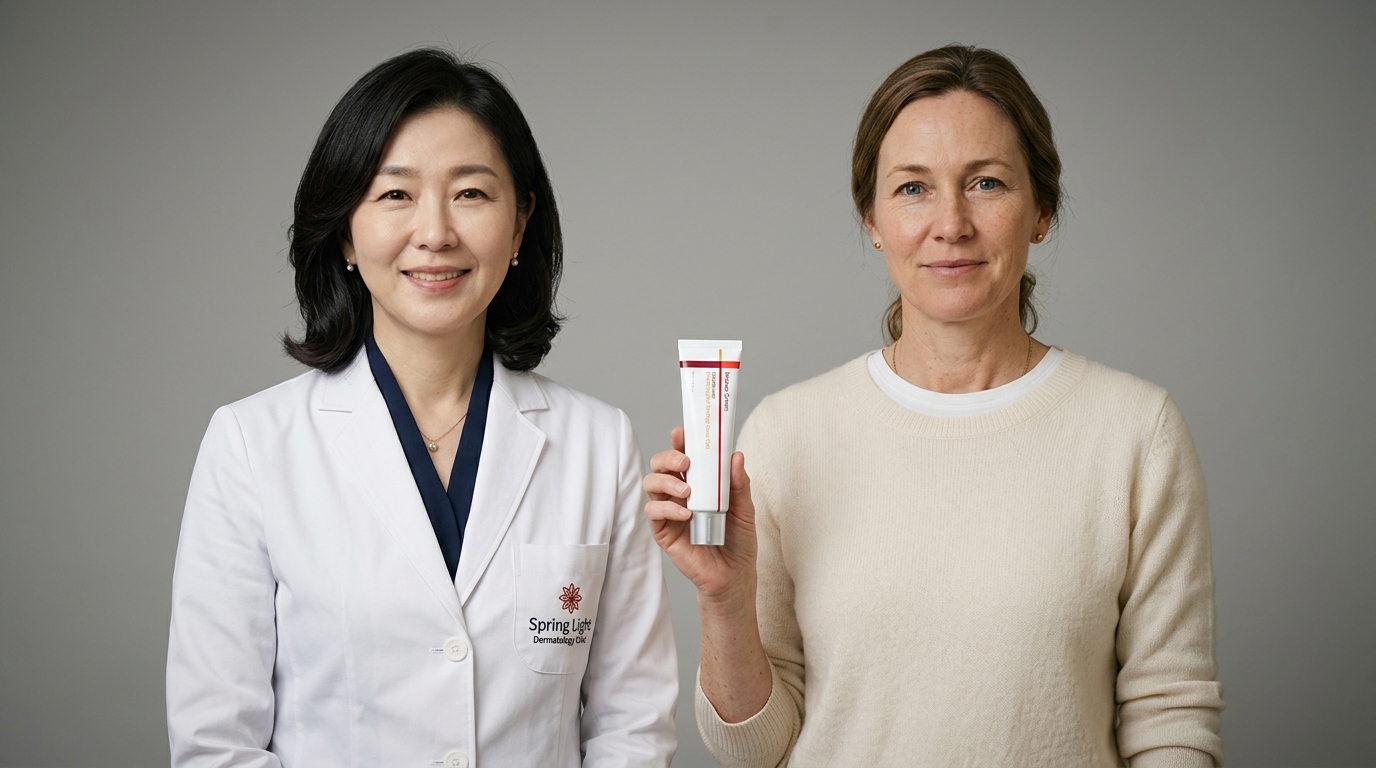
And together with Dr. Kim, a board-certified Korean dermatologist with 25 years of clinical practice at Spring Light Dermatology Clinic in Seoul and the formulator behind the single most-used dermatology cream in Korea, I am about to expose the dirty secret that keeps 60 million American women over 50 trapped in expensive multi-step routines while the beauty industry laughs all the way to the bank.
But first, let me tell you about the Wednesday afternoon that changed everything.
The 2:47 PM That Broke 20 Years of Belief
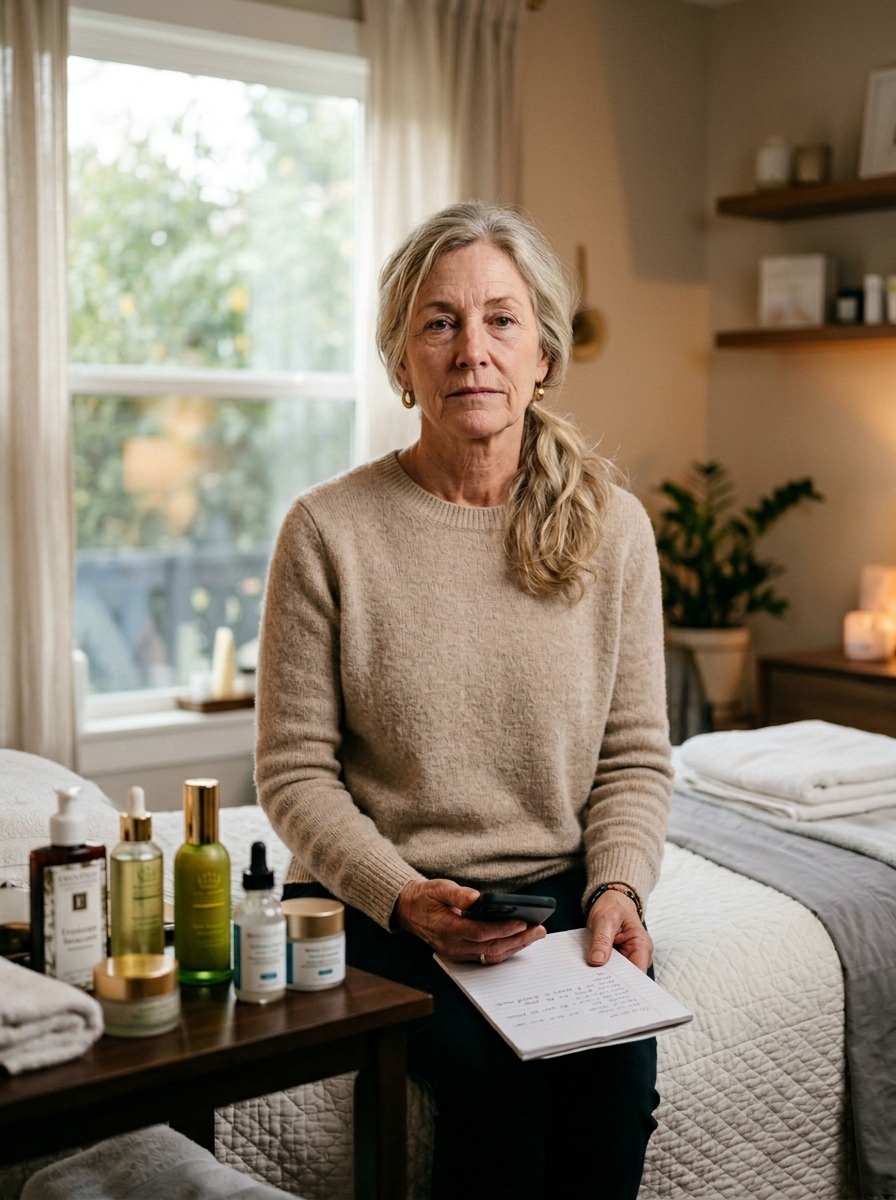
It was 2:47 PM on a Wednesday.
Margaret sat down in my treatment room for what was supposed to be a routine deep cleanse and a chemical peel. She was 58. A retired second-grade teacher. Married 34 years. Two grown children. Her only son was getting married in six weeks.
She was not crying when she walked in. She was past crying.
She handed me her phone before I could even greet her. The screen was open to her son's wedding registry. Then she swiped, and showed me a photo from the rehearsal dinner the night before.
There were maybe 40 people in the photo. Bride's family, groom's family, the bridal party, the photographer's wife, even the wedding planner. Margaret was in the very back left corner, partially hidden behind another woman's shoulder, looking down.
"That's how I made the photographer take it. I asked him to crop me out completely but he wouldn't. He said it would look weird if the mother of the groom wasn't in the photo."
Then she pulled out a folded piece of notebook paper from her purse. Handwritten. Red pen. She slid it across the counter between us.
I will never forget what was on that paper as long as I live.
The "gold standard" vitamin C serum: $182
Prescription retinoid (monthly refill): $94
The luxury jar moisturizer "the experts swear by": $200
The trendy peptide cream from the "clean beauty" wall: $90
The "mature skin" eye cream the magazine recommended: $44
The "doctor-brand" overnight retinol cream: $135
The dermatologist-recommended mineral sunscreen: $42
The "midnight recovery" facial oil: $58
The "lactic acid" exfoliating serum the influencer keeps pushing: $122
TOTAL: $967
I was reading this list. And underneath the total, in the same red pen, she had written four more lines.
For three years.
Every single day.
Twice a day.
Result: I hid in the back of my son's wedding rehearsal photo.
And underneath that, almost as an afterthought, she had added one more line in smaller handwriting.
Plus $480 in Botox every 12 weeks. $1,920 a year. For two years.
I did the math in my head before I could stop myself.
Another $3,840 in injections. On top of the $967 in products. Almost $5,000 over three years of "anti-aging" investment. That had ended with Margaret hiding in the back corner of her son's wedding rehearsal photo because the Botox could smooth her forehead but it could not give her face back.
Margaret looked at me across that piece of paper. Calm. No tears. Just done.
"Sarah, I am not asking you to recommend something new. I have $967 of products that do not work on my bathroom shelf and a forehead that doesn't move from injections that didn't fix anything. I want you to tell me why none of it worked. Because if you can't tell me, I am throwing all of it in the trash and I am going to be the old woman in the back of every family photo for the rest of my life."
She paused.
"And I want you to be honest with me. Are you part of the lie too?"
That is when something inside me snapped.
Because the truth is, yes. I had been part of the lie.
I had been pushing the "gold standard" vitamin C serum on my clients for over ten years. I had recommended luxury jar moisturizers on women who could not really afford them, because the brand reps told me they were "the best." I had told women they needed a separate eye cream specifically formulated for "mature skin" simply because they had turned 50. I had referred more women to Botox appointments than I could count, knowing it would smooth the surface for twelve weeks and do nothing for the skin underneath. I had built my career on adding bottles to my clients' shelves and adding lines to their dermatology bills.
I was not making their skin better. I was making my commission. I was making the brand reps happy. I was making the salon distributor happy. I was making nine different premium skincare companies happy.
The only person I was never actually helping was Margaret.
I looked at this vibrant, kind woman who had raised two children, taught second-grade for 35 years, and was about to watch her only son get married. Hiding in the back corner of his wedding photos. Because she did not trust her own face in the mirror anymore.
And I made her a promise I had no idea how I was going to keep.
"Margaret. Don't throw the bottles out yet. Give me six months. I am going to figure out why none of this is working. And I am not stopping until I find the answer."
That night, I drove home and stood in front of my own bathroom counter. I counted twelve bottles. Some half-empty. Some full but expired. All of them telling me a different story about why my skin needed a different solution.
For the first time in 20 years, I asked the question I should have asked decades ago.
Three Months at the Kitchen Table at 4 AM

For the next three months, I became obsessed.
I cancelled half my appointments. I told my regular clients I was "taking time to study." Some of them assumed I was leaving the industry. A few were right to wonder.
I read everything. The clinical literature on collagen decline after menopause. The studies on barrier function. The papers on chronic low-grade inflammation in aging skin. I cross-referenced every active ingredient in Margaret's $967 bathroom shelf against what the dermatological research actually said about how each one works in isolation.
What I found was not surprising. Each ingredient, on its own, has some clinical support. Vitamin C does fade some surface pigmentation. Retinoids do increase cell turnover. Hyaluronic acid does pull moisture into the upper layers of the skin.
But here is what nobody talks about.
Most of these ingredients are working in different directions at the same time. Vitamin C wants the skin slightly acidic. Niacinamide wants it slightly neutral. Retinoids destabilize when they sit on top of an acid serum. The "peptide cream" you layer on top is mostly water and emulsifier with a fraction of a percent of actual peptides because the brand is required by FDA to put the dosage on the back label and the dosage is laughable.
The premium skincare industry has spent thirty years convincing American women that more steps equals better skin. The clinical research shows the opposite. More steps means more inflammation, more confused barrier signaling, more interactions you didn't sign up for, and more reasons to buy the next "solution."
And every brand in your bathroom is built around the same business model: make the customer believe one product will never be enough.
If one cream worked, you would stop buying five.
If one cream worked, the $50 billion industry would lose half its revenue overnight.
That is not a conspiracy theory. That is the math.
By the end of month two, I was convinced of something I never thought I would say out loud as an esthetician.
The Western premium skincare industry is not failing American women because the science is wrong. It is failing American women because the science is not the goal. The goal is to keep selling bottles. The goal is to keep filling appointment books at the dermatology clinic. The goal is to keep the cycle going.
But the question that kept me up at night was simpler.
The Question My Husband Asked at 11 PM

I started looking in the obvious places first.
I read every Mayo Clinic dermatology recommendation. I read every textbook used in American esthetician licensing programs. I cross-referenced what American dermatologists were prescribing against what was actually working for the older patients I knew.
The same story everywhere. Retinoids. Vitamin C. Sunscreen. Maybe a peptide cream. Maybe Botox if the patient could afford it. Maybe a series of laser treatments.
Bottles. Procedures. Appointments. Subscriptions. The same model with different brand names attached to it.
I gave up on American dermatology after six weeks of reading.
Then one night, my husband, who is a chemical engineer and who had been watching me spiral for weeks, asked a question that opened a door I had never thought to walk through.
"Sarah, why are you only looking at American sources? American skincare is fifteen years behind the Asian market on the science side."
I did not know what he meant. He pulled up a study his company had referenced for a packaging project. It was about pharmaceutical-grade extracts used in Korean dermatology clinics. Specifically about a centella extract called TECA that was being used in Korean wound care, scar treatment, and post-procedure recovery.
The paper was from 1994.
1994.
The Korean medical community had been using the same ingredient that was just starting to get talked about in American "K-beauty" marketing as a trendy add-on. They had been using it as a pharmacological treatment, not a beauty trend, for thirty years.
I started looking at what Korean dermatologists actually prescribed.
The picture was so different from what I had been seeing in the American clinics that I thought I was reading about a different organ.
Korean Dermatologists Do Not Prescribe Routines. They Formulate One Cream.
By month three, I had translated, read, or skimmed every English-language paper I could find on Korean dermatological practice for mature skin.
What I found ran against everything American esthetics had taught me.
Korean dermatologists do not prescribe routines.
They formulate ONE cream.
I went back and re-read this three times. I was sure I had to be missing something.
A typical Korean dermatology prescription for a 55-year-old woman with the same concerns Margaret had walked into my treatment room with, fine lines, dark spots, sagging, dullness, the loss of firmness that comes with the hormonal drop after menopause, was one cream.
That was it.
Not seven steps. Not a separate eye cream. Not a peptide serum on top. Not a vitamin C in the morning and a retinol at night. Not Botox to fill in what the cream did not address.
One cream.
The cream itself was built around six clinical-grade actives. TECA at clinical concentration, the standardized extract Korean dermatologists actually use. Centella asiatica, the broader botanical that TECA comes from. Niacinamide, for hyperpigmentation. Hyaluronic acid, for moisture retention. Peptides, for collagen support and the relaxation of expression lines. Ceramides, for barrier repair.
Six actives. One cream. Address everything at once.
I sat at my kitchen table at three in the morning and I could not understand what I was reading.
The American skincare industry had spent decades convincing me, and convincing my clients, that aging skin needed six separate products. Korean dermatology had figured out how to put the same six actives in ONE cream, formulated to work together rather than against each other, and they had been quietly doing this for thirty years.
The mechanism was not even that complicated. It was a matter of pH stability, ingredient pairing, and formulation chemistry. Korean dermatologists treated the cream like a pharmaceutical product. They built it to work as a system, not as a collection of competing single-ingredient bottles.
And here is what hit me hardest.
A Korean dermatologist in Seoul could prescribe one cream to a 60-year-old woman and address what a $200 luxury moisturizer plus a $182 vitamin C serum plus a $135 retinol cream plus a $90 peptide cream plus a $58 facial oil was failing to address for an American woman of the same age.
Same six actives.
Different country.
Different business model.
Different outcome.
That night I sat down at my laptop and started typing the email I had been afraid to type for three months.
It was addressed to a dermatologist in Seoul named Dr. Kim, whose name I had seen on three of the studies I had been reading. The subject line was simple.
"American esthetician with a question I cannot find an answer to. Will you help me?"
The 40-Minute Video Call That Sent Me to Seoul
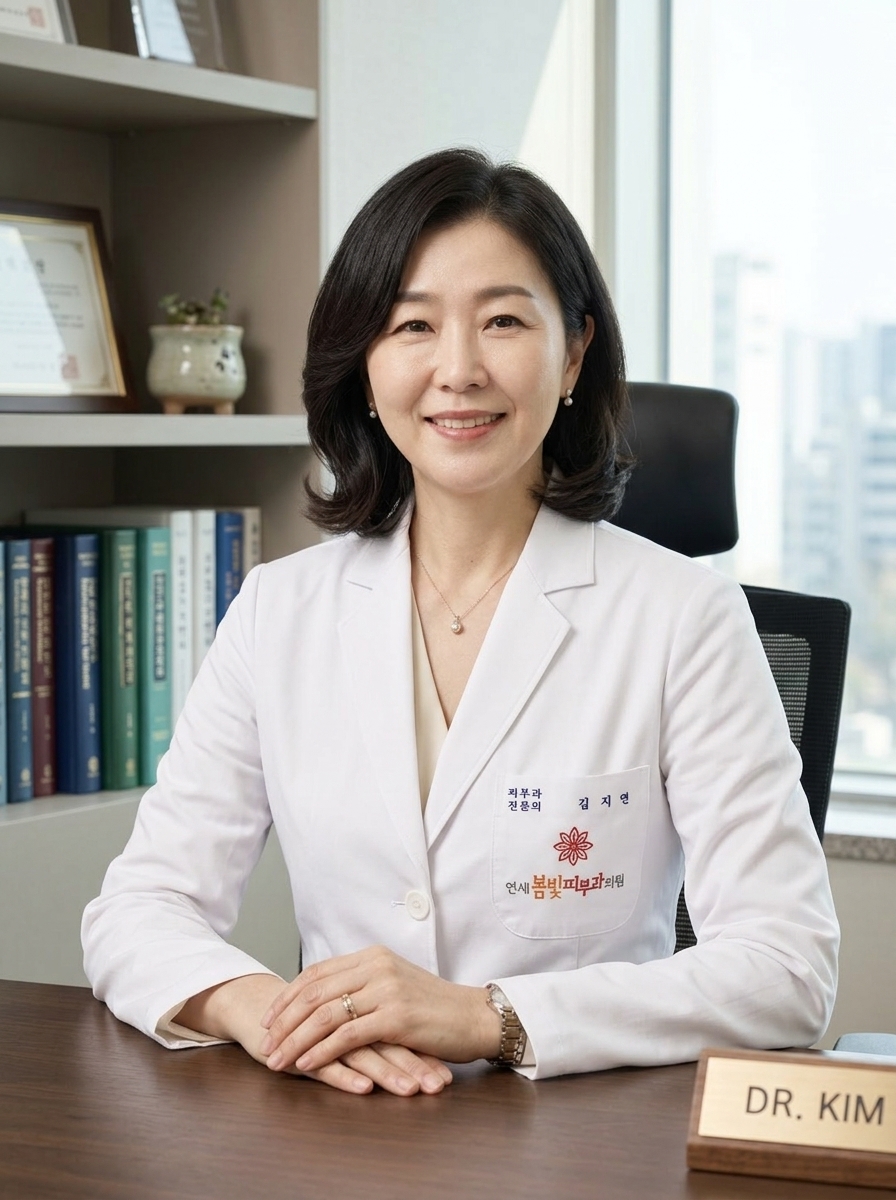
Dr. Kim replied within 14 hours.
The response was short. Six sentences. Polite. Direct. She would be willing to speak with me by video call the following week if I was serious. She asked me to send three questions in advance. She wanted to know what I had already read so we did not waste time on basics.
I almost did not believe she had written back.
The video call happened at 8 PM my time and 9 AM her time on a Wednesday. She wore a white clinical coat. She had a quiet, level voice. The kind of voice that had explained difficult things to thousands of patients over twenty-five years and was not interested in flattering anybody.
I asked her the question I had been carrying for three months.
"Why does Korean dermatology prescribe one cream when American dermatology prescribes seven?"
She looked at me through the screen for a long moment.
"Because in Korea, the dermatologist is paid to solve the problem. In America, the brands are paid to keep the problem ongoing."
She did not say it with anger. She said it the way a doctor explains a lab result. Matter of fact.
She continued.
"In Korea we do not sell women a routine. We formulate one thing that does what six of your American products fail to do. If the cream works, you do not need the routine. The routine exists because the creams do not work. That is the entire difference."
I asked her to walk me through how she formulated the cream she had developed at her clinic. She did. For forty minutes. The pH stability concerns. The ingredient pairing logic. The reason the peptide and the niacinamide had to be at specific molar ratios. The reason the TECA had to be sourced from a specific Korean pharmaceutical supplier because the standardization mattered more than the ingredient itself.
Forty minutes of formulation chemistry from a woman who had spent twenty-five years quietly doing what American premium skincare had been pretending was impossible.
At the end of the call I asked her if I could come visit her clinic. To see what she was doing in practice. To see her patients.
She said she would think about it.
Two weeks later, she emailed me back. She said yes.
I booked a flight to Seoul.
I left my husband and my appointments and a stack of unread emails and I flew sixteen hours to a country I had never been to, to spend three days at a dermatology clinic in a neighborhood I could not pronounce, with a doctor I had only met on a video screen.
What I saw there is the reason I am writing this article.
What Five Korean Patients Showed Me About Aging Skin
Spring Light Dermatology Clinic is on the fourth floor of a building in Gangnam. Quiet waiting room. Soft lighting. Korean magazines on the side tables. Patients waiting their turn without any of the salon-energy I had been working in for twenty years.
Dr. Kim met me at the front desk. She introduced me to two of her staff. She walked me back to her consultation room. Then she did something I did not expect.
She had asked five of her patients in advance if they would be willing to let an American esthetician sit in on their consultations as part of an educational visit. All five had agreed.
The first patient was 62 years old. She had been a patient at Dr. Kim's clinic for sixteen years. She came in once a year for a check-up.
I will not forget what I saw when she walked into the consultation room.
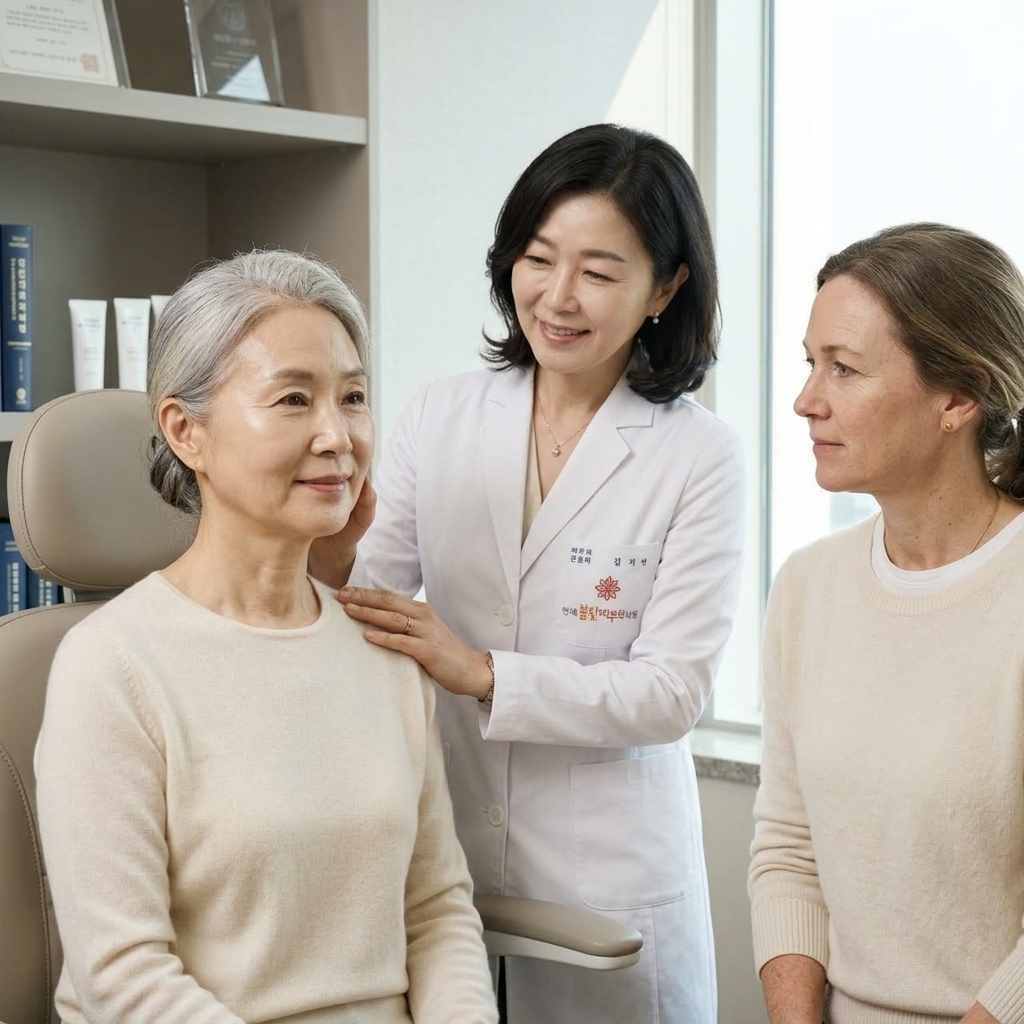
Her skin had the kind of even tone and tight texture that I had only seen in American women through aggressive intervention. Botox, fillers, laser resurfacing, monthly facials, the works. This woman had used one cream, twice a day, for sixteen years.
That was it.
No retinol. No vitamin C serum. No peptide cream. No eye cream. No Botox. No laser. One cream. Once in the morning. Once at night.
Her bathroom shelf had one bottle on it.
I asked Dr. Kim if she could ask the patient how much she had spent on skincare in the past year. The patient laughed, said something in Korean, and gave me a number.
It was the equivalent of about $300.
For the entire year.
Margaret had spent $967 on bottles plus $1,920 on Botox in the same twelve months. Sixty-four hundred dollars total over the previous two years. To hide in the back of her son's wedding rehearsal photo.
This Korean woman, who was four years older than Margaret, had spent $300 over the same period and had skin I could not stop staring at.
I sat in five consultations over the next two days. The story was the same every time.
One cream. Daily. For years.
The oldest patient I observed was 78. She had been on the same cream since she was 51. Twenty-seven years. Her skin had a calm, unrushed quality. The kind of quality you cannot fake with injectables. The kind of quality that comes from leaving the barrier function alone and letting the biology do its slow work.
At the end of the second day, I asked Dr. Kim a question I had been afraid to ask.
"Can I take this cream back with me? Can I give it to my client who broke down in my treatment room six months ago?"
She did not say yes immediately. She asked me what I planned to do with it.
I told her about Margaret. About the wedding photo. About the $967 list and the $480 Botox refills. About the six-month promise I had made and was now four months overdue on keeping.
She nodded once.
"I have been formulating this cream for twenty-five years. I have been quietly waiting for it to reach women like Margaret. I will give you enough to start her on it. If the results match what I have seen here, we can talk about whether American women should have access to it."
I cried on the flight home.
Not from exhaustion. From something else. The kind of clarity that comes when you have been wrong about something for twenty years and you finally know what the right answer looks like.
Six Actives. One Cream. Twenty-Five Years of Quiet Use in Seoul.
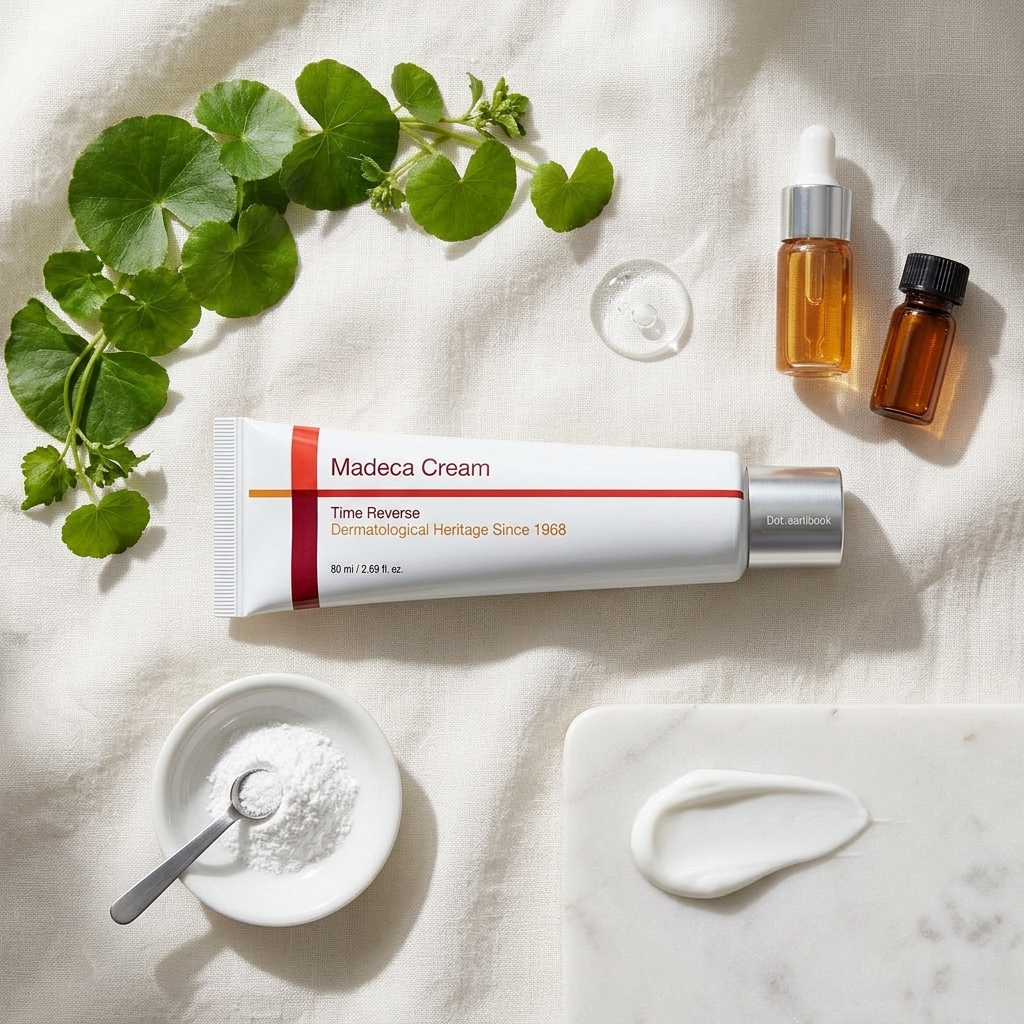
Let me explain what is actually in this cream. Because the difference between this and what is on your bathroom shelf is not the marketing. It is the formulation.
The hero active is TECA. The full name is Titrated Extract of Centella Asiatica. It is the standardized pharmaceutical-grade extract of the centella asiatica plant. Korean dermatology has been using it in clinical practice for thirty years for wound healing, scar repair, barrier restoration, and the specific kind of inflammation that drives visible aging in mature skin.
TECA is not the same thing as raw centella extract. Most American "centella creams" contain raw extract at trace concentration. Enough to write "centella asiatica" on the label and call it a K-beauty product. Not enough to do clinical work on aging skin.
TECA at clinical-grade concentration is standardized for three active compounds called triterpenes. Asiaticoside. Asiatic acid. Madecassic acid. These are the molecules your skin biology actually responds to. The rest is just the plant. The Korean pharmaceutical industry titrates the extract specifically so the dose is measurable and reproducible.
Dr. Kim has formulated her cream with TECA at clinical concentration. Not trace. Clinical.
Around the TECA, the formulation includes five other actives. Each one chosen for what it does at the biological level, not how it feels on the skin.
Niacinamide. Reduces pigment transfer to surface cells. Fades dark spots. Evens out the tone.
Hyaluronic acid. Pulls moisture into the skin at multiple layers, so the barrier repair work TECA is doing has the hydration it needs to actually finish.
Peptides. Specifically a peptide called Acetyl Hexapeptide-8, which subtly dampens the micro-contractions of facial muscles. The result is the same kind of softening of forehead lines and crow's feet that some women are getting from Botox, achieved through a topical mechanism instead of an injectable one.
Ceramides. The lipid that builds the actual barrier of your skin. The ceramides hold the cellular repair work in place once the TECA has done its job.
Centella asiatica, the broader botanical that the TECA extract comes from. Standardized but at a different concentration. Calms inflammation. Supports barrier function.
Six actives. One cream. Formulated to work as a system.
This is what I had been looking for the entire three months I had been reading at my kitchen table at four in the morning. The reason it had not been on my radar was simple. Korean dermatology is not run by the same business model as the American skincare industry. There is no Sephora shelf for this. There is no department store counter pushing it. There is no influencer being paid commission to talk about it. There is just a cream a dermatologist formulates because it works, prescribes to her patients, and sells at a fair price.
The American premium skincare industry has had thirty years to figure out what Dr. Kim figured out. They have not done so. Not because they could not. Because they chose not to.
Because the multi-step routine business model is more profitable than a single product that actually solves the problem.
I am no longer interested in being part of that business model.
I am interested in what this cream did for Margaret over the next three weeks.
The Tube I Handed Margaret Three Weeks Before Her Son's Wedding
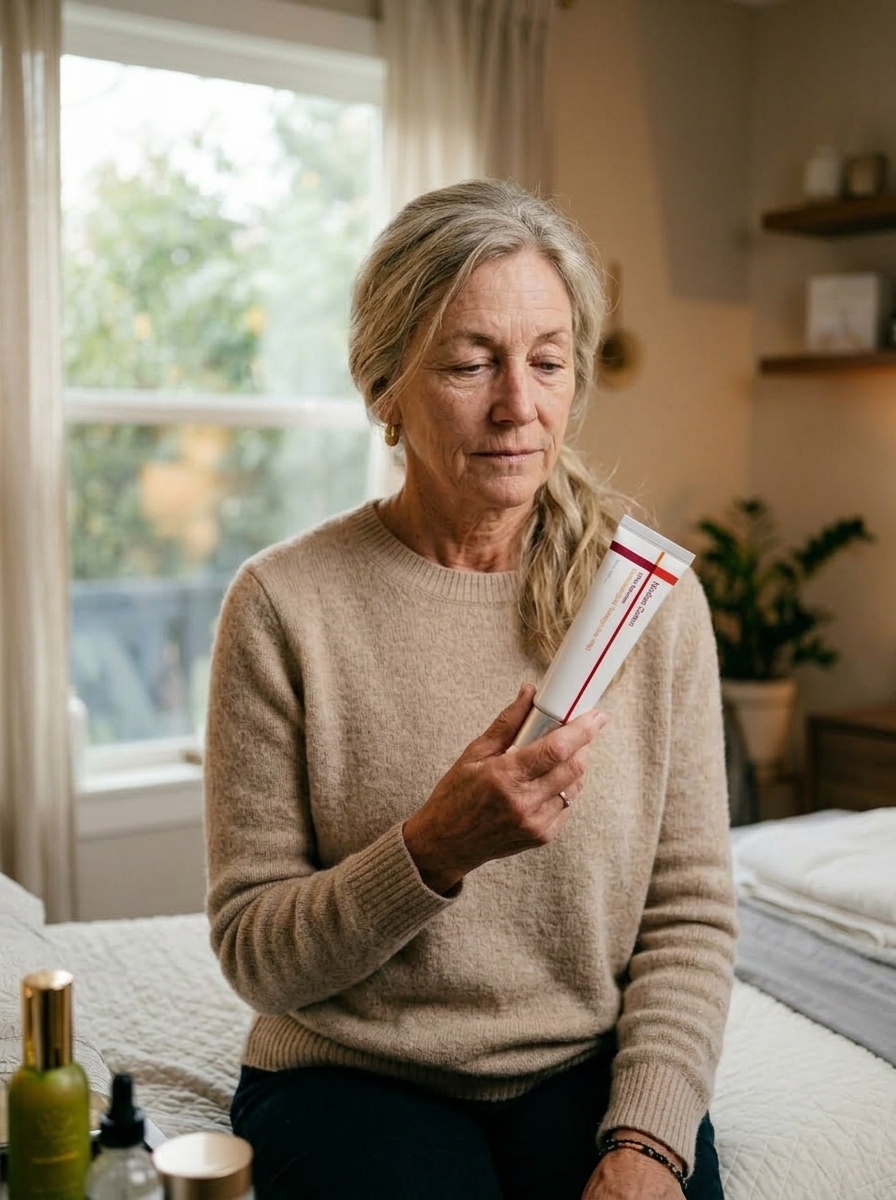
I sat down with Margaret on a Tuesday morning. I had been back from Seoul for four days. Her son's wedding was in three weeks.
She came into the treatment room expecting me to either refund her appointment fee or tell her there was nothing more I could do for her face.
I put the cream on the counter between us.
"Margaret. I went to Seoul. I met the doctor who formulates this. She let me bring back enough for you to start. I am going to ask you to do one thing. Twice a day. Pea-sized amount. On a clean face. No other products. No serums. No vitamin C. No retinol. No eye cream. Nothing on top of the cream. Just the cream. For ninety days. Will you do it?"
She picked up the tube and looked at it.
"What is in it?"
I told her. The same six actives I have told you. She made me write the names down. She wanted to look them up.
"And you went to Seoul for this?"
"I went to Seoul for this."
She put the cream in her purse. She got up. She walked out of my treatment room without making her next appointment. The next time I saw her was three weeks later, the day of her son's rehearsal dinner.
She walked in at 1 PM on a Thursday.
I had to look at her twice before I said anything. Because the woman walking through my door was not the woman who had handed me the red-pen list six months earlier.
The first thing I noticed was her eyes. Not the lines around them. The eyes themselves. They were not tired anymore. The undereye area that had been hollow and grey was filled in and even. The puffiness that had been worse in the morning was just gone.
Then I noticed her skin tone. Not on the cheek. On the forehead. The forehead Botox had been freezing for two years.
Margaret had not had a Botox appointment in eight weeks.
You could see the lines, faintly. The way you can see lines on a woman whose face moves and is healthy and is hers. Not the frozen, unmoving forehead the injections had been giving her.
Her own face was back.
I asked her how she felt.
She started crying.
Not the broken sobbing from six months earlier. Different.
"I am going to be in the photos, Sarah. I'm going to be in the photos."
The Four-Word Text Margaret Sent Me at 11 PM

I do not have the wedding photos. They are not mine to share.
What I have is the photo Margaret texted me at 11 PM the night of the wedding. It was a screenshot from the photographer's preview gallery.
It was a wide shot of the bride and groom at the altar, with both families flanking them. The lighting was soft and warm. The bride's mother was on the left. Margaret was on the right. The mother of the groom. Standing where she was supposed to stand. Facing the camera. Smiling. Not looking down. Not partially hidden behind anyone else's shoulder.
The text she sent with it was four words.
"I am in it."
I cried at the kitchen table.
Then a second text came through.
"Sarah, I want every woman who came to you over the last twenty years and walked out with a different cream to know about this. Promise me."
The wedding photo is not the only thing Margaret got back. Her relationship with her husband changed. She told me a few months later that he had started cupping her face in his hands when she came down to the kitchen in the morning the way he used to. That sounds like nothing. It is not nothing.
She got rid of every product on her shelf. All $967 of them. She kept her last Botox refill bottle on the counter for two weeks before throwing it out. Not because she had a moral stand against Botox. Because she wanted to remember what she had been doing to herself before she found the cream.
Her last appointment with me was a deep cleanse. We did not even need to do a chemical peel anymore. There was nothing for the peel to peel.
She left me with one more sentence. I have written it down. I have used it as the test for every client I have recommended this cream to since.
"Sarah. For the first time in eight years, I do not need to manage my face. I just have a face."
Thirty-One Women. The Same Transformation.
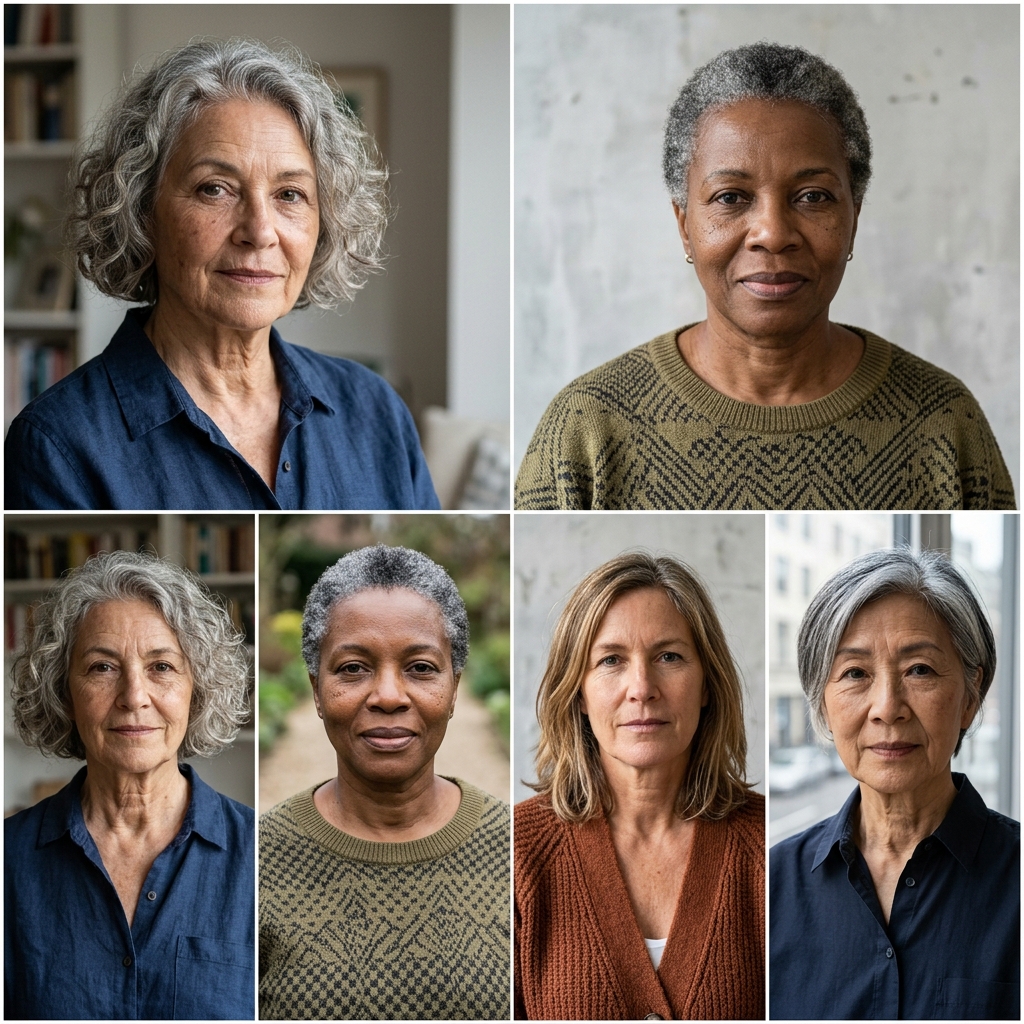
Margaret was the first. She is not the only one.
In the eight months since Margaret's wedding I have had thirty-one of my clients on this cream. Thirty-one women between the ages of 52 and 76. Mostly menopausal. Mostly with the same story as Margaret. Bathroom shelves full of expensive products that were not working. Most of them on some form of dermatology intervention. Several on Botox. Two on filler. One on monthly laser treatments.
The pattern has been remarkably consistent.
Day three. Skin feels softer to the touch. Less tight. Morning puffiness around the eyes reduces.
Week one. The mirror in the morning starts to look different. Not in a way you can describe in marketing language. In the way that you notice when you have stopped seeing what you were dreading.
Week three. The collagen support work that has been happening underneath the surface starts to show through. Firmness around the cheekbones and the jawline. The tone evens. Dark spots fade. The face stops looking grey by mid-afternoon.
Week six. Friends and family start asking what you are doing differently.
These are not testimonials. These are observations. I take notes after every appointment. I have a notebook. I write down what I see and feel under my fingertips when I run my hands across each client's skin.
The notebook is the most honest record I keep.
Karen, 64. Tried four different premium brands before this. Came in convinced nothing would work on her skin because she had "already tried everything." Six weeks in, her husband asked if she had been getting more sleep.
Patricia, 71. Had given up on creams completely two years before I gave her this one. Dark spots on her cheekbones had been fading for eight weeks before she even believed it was the cream. Her exact words were "I do not trust this yet."
Linda, 58. The most reactive skin I have ever worked with. Every previous active had irritated her. She started this cream skeptical of every word I said. She is now on month four. The patches around her nose are gone. She has not had a flare in eleven weeks.
I could keep going. I won't. The pattern is the same.
The Western premium skincare industry is failing women. Korean dermatology has been quietly solving the same problem for thirty years. The solution has been there the entire time. We just were not allowed to see it.
Why the American Skincare Industry Will Never Tell You This
You are reading this article and there is a question forming in the back of your mind.
If this cream is what I am saying it is, why have you never heard of it?
I had the same question. So let me tell you what I learned.
The American premium skincare industry generates roughly $50 billion in annual revenue. About sixty percent of that revenue comes from the "anti-aging" category. The market is built on a simple business model. Multiple SKUs per customer per year. Constant new product launches. Influencer marketing budgets that are large enough to keep a single product launch in every magazine and Instagram feed for six months.
A cream that addresses what six products are supposed to address, sold at a fair price, distributed directly to the consumer without department store markups or salon distributor commissions, would gut that revenue model.
It would not slow it down. It would gut it.
So the brands have a structural reason not to formulate this. Even if they could, they would not. There is no point making a product that destroys your other nine SKUs.
The dermatologists who run American skincare clinics are paid by per-procedure revenue, by Botox refill cycles, and by selling premium product lines at the front desk. A topical cream that calmed inflammation, evened tone, firmed the jawline, and faded dark spots would empty their waiting rooms.
The influencers and the magazine editors get paid by brand sponsorships and affiliate commissions. The brands paying them are the ones with multi-product routines and high margins. A small Korean dermatology product, priced fairly, sold directly to consumers, has no commission to give. So nobody is incentivized to mention it.
This is not a moral story. It is a structural story.
The premium skincare industry will never put this cream on a Sephora shelf. Not because it does not work. Because it works so well it would destabilize their whole business model.
Korean dermatologists have been quietly using it for thirty years. Korean women have known about it for a generation. American women have been kept in the dark, sold a six-product routine, and charged thousands of dollars over a few years for the privilege.
That ends now.
What Margaret Asked Me to Tell Every Woman Who Has Read This Far
I am writing this article because I made a promise to Margaret eight months ago. She asked me to make sure that every woman who came to me over twenty years with a different cream knew about this one.
I am keeping that promise.
After Margaret's transformation, more of my clients started asking me what I was using. Then their friends started asking. Then women I had never met started writing to me. I did not have a way to give them the cream. I asked Dr. Kim if her clinic would consider making it available outside of Korea.
She thought about it for two months.
Then she agreed. The cream is now being shipped from Seoul to American women through a small distribution arrangement she set up. There is no department store markup. There is no salon distributor commission. The price is the same as what her Korean patients have been paying for twenty-five years, plus shipping.
The 50% Off "Screw You" to Big Beauty
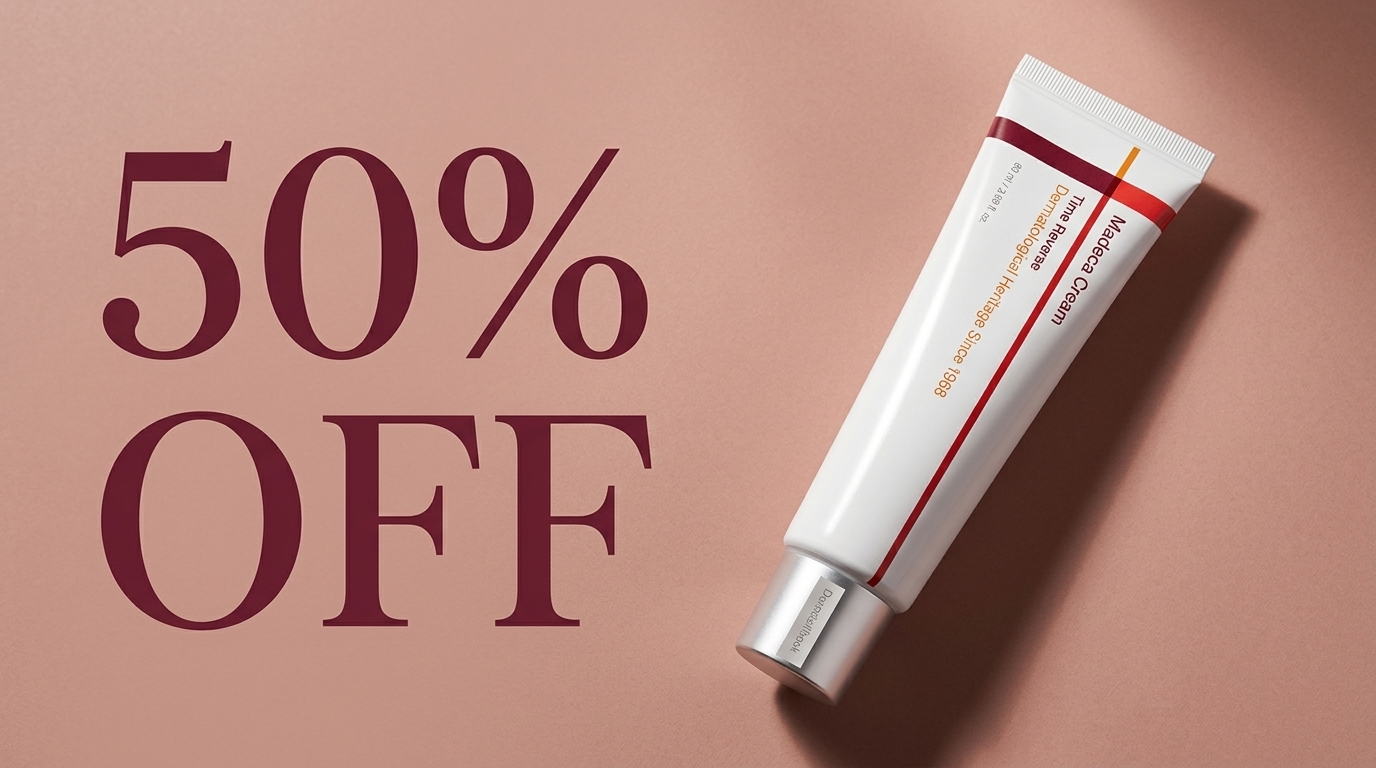
For twenty-five years, the TECA Skin Repair Cream has been the everyday standard in Dr. Kim's Seoul clinic. Korean patients walk in, walk out with one tube, and walk back in once a year for a check-up. The price they pay has barely moved in two decades.
When Dr. Kim agreed to ship to American women, she set one condition.
"The first tube must be affordable enough that any American woman can try the Korean approach. Once she sees how her skin responds, the routine takes care of itself."
That is why the introductory price is 50% off.
Not because the cream is going away. Not because the company is under pressure. Dr. Kim has been quietly formulating this for twenty-five years and she is not going anywhere.
The discount exists because Dr. Kim wants American women to have the same chance Korean women have had for years. The only real barrier left was the price of trying the protocol for the first time. She removed it.
Today only. 50% off Dr. Kim's TECA Skin Repair Cream. Plus free shipping anywhere in the United States.
A fraction of what a single Botox forehead session costs you. Less than your monthly Sephora invoice. Less than the "luxury" jar moisturizer you were sold last year that did not work.
TECA Skin Repair Cream Now Only $40/Tube
+ FREE Shipping to the United States
You Are Joining Something
In the last three months, more than six thousand American women have started Dr. Kim's protocol. They are quietly comparing notes about day-three softness, week-one mirror difference, and week-three jawline firmness.
This is not a one-off purchase.
This is stepping into the same morning routine millions of Korean women are running. The same six actives. The same simple cream. The same quiet results.
The American skincare industry has spent thirty years convincing you your face needs seven products. Korean dermatology has spent thirty years quietly showing it does not.
Now you know which side of the math you want to be on.
When the Introductory Batch Sells Through, the Price Returns to Normal
Right now, we have 4,200 tubes at the introductory price.
After this batch sells through, the price returns to normal and stays there. That is the price Dr. Kim's Korean patients pay. That is the price every American woman will pay for every tube after this batch.
This is the only window you will ever see Dr. Kim's TECA Skin Repair Cream at a heavily discounted price.
If your bathroom shelf still has nine bottles on it, this is the moment to try the Korean protocol at the price Dr. Kim set for the first wave of American women.
Every day you wait is another day you are:
- Standing in front of nine bottles that do not work
- Paying for one more dermatology copay that does not fix the underlying problem
- Missing the transformation Margaret experienced for only $40
Click below and start.
Claim My 50% Discount Now- Stock at this discounted price is limited to 4,200 tubes
- FREE shipping to the United States, today only
- 90-Day "Your Face Back" Guarantee
- Secure checkout, your information is protected
The introductory batch is selling faster than Dr. Kim's clinic anticipated.
Tubes remaining at the $40 introductory price: 3,847
Once this batch sells through, the price returns to the normal price and stays there. Lock in 50% OFF and FREE EXPEDITED SHIPPING before the introductory window closes.
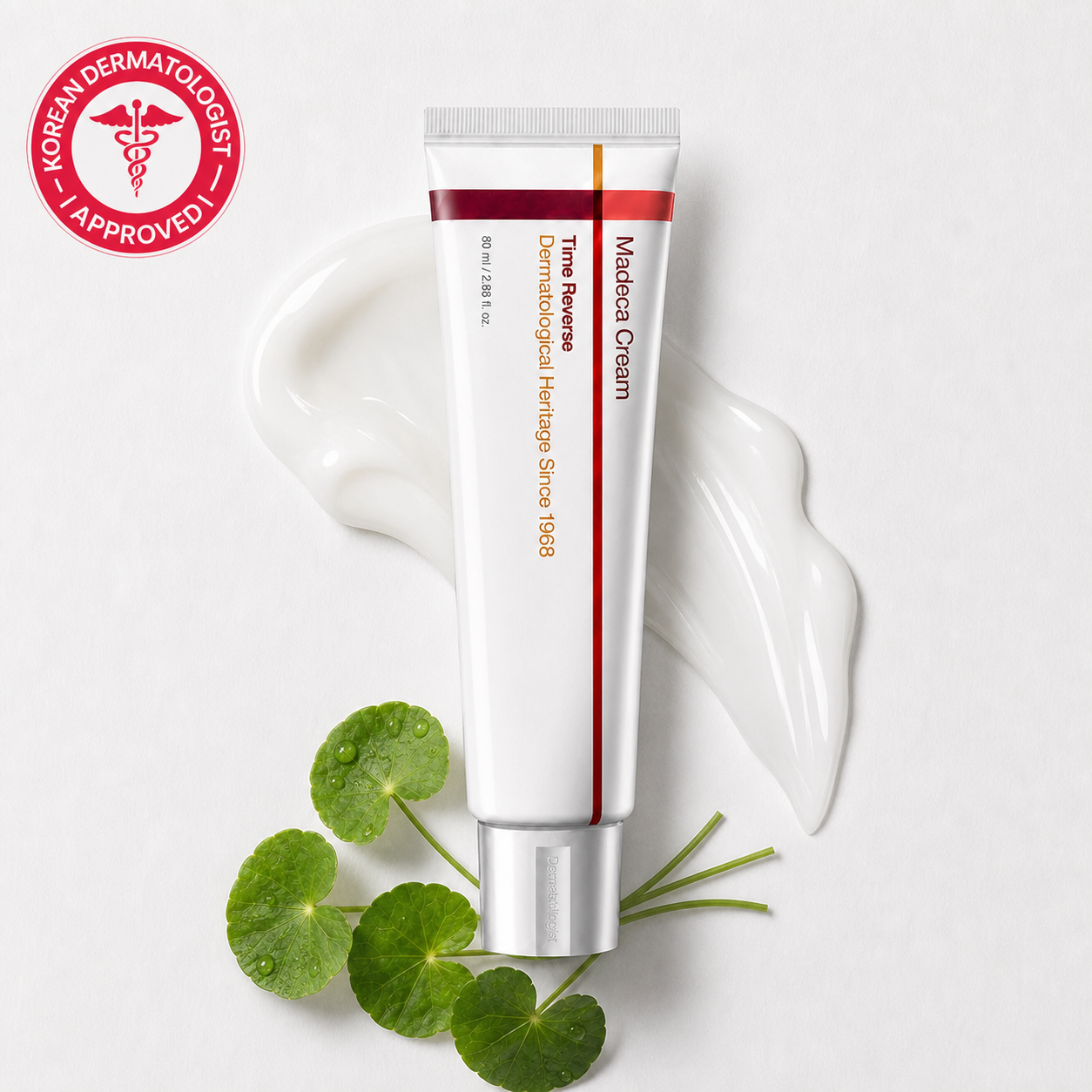
Dr. Kim's 90-Day "Your Face Back" Promise
Look. I get it.
You have been burned before.
Spent money on "miracle creams" that now collect dust under your bathroom sink. Serums that promised results in "2 weeks" and did nothing. Treatments that looked great in the dermatology brochure and broke after two visits.
So Dr. Kim is not asking you to trust her. She is asking you to test her.
Here is the promise her clinic backs every American tube with.
Use the Osenra TECA Skin Repair Cream for 90 days.
Large pea-sized amount, morning and night, on a clean face. No other products on top.
Take a weekly photo in the same light.
Run your fingers across your jawline once a week and feel the firmness change.
Notice when you stop dreading the bathroom mirror in the morning.
And if you do not wake up on day 90 thinking:
"Wait. I am not managing my face today. I just have a face."
"My forehead moves and I do not need to hide it."
"I caught myself in a photograph and I did not flinch."
Why is she this confident?
Because the women who use this cream consistently for ninety days do not ask for refunds. They ask where the next tube is shipping from.
Because Dr. Kim has been formulating this for twenty-five years for Korean patients who have stayed on the protocol for decades.
When you address the root cause, results are not a mystery.
They are inevitable.
The Two Paths
Right now you are standing at a crossroads.
Two paths stretch out in front of you.
Only one leads to your face back.
- Keep counting the lines around your eyes every morning
- Keep avoiding mirrors in bright lighting
- Keep your concealer routine that no longer covers what is underneath
- Keep spending $200 to $500 a month on bottles that create dependency, not results
- Keep being a recurring revenue stream for companies that NEED you to stay desperate
- Keep skipping family photos because you "do not look like yourself anymore"
- Keep watching your husband look past you when you walk into the kitchen
- Wait for them to give you one more chance
Click below. Lock in the introductory price before this batch sells through. Join the wave of American women who have already stopped chasing the nine-bottle routine. Decide for yourself.
To clearer, firmer skin you will actually recognize as yours,
Dr. Kim, Board-Certified Korean Dermatologist (25 years)
Sarah Mitchell, Licensed Esthetician (22 years)